Friday, May 6, 2022

My Book Project: Something like..."The Whole Aging Catalog"

I had the opportunity to talk with someone about my book project that I try to explain as a large-format book, something akin to the Whole Earth Catalog published by Stewart Brand several times a year between 1968 and 1972. If you're old enough, you'll remember that it as how Wikipedia describes: "The editorial focus was on self-sufficiency, ecology, alternative education, 'do it yourself' (DIY), and holism, and featured the slogan "access to tools."

My version has a working title of "The Whole Aging Catalog," and will provides strategies for older adults for dealing with both the positives and negatives of senior life. It's meant to give people and sense of power in engaging in a fruitful life, and not falling into the trap of victimhood that I see so many folks experience as they become frustrated with ageism and ableism in this USA.

It will suggest a full range of alternatives for the latest treatment options, but without commercial bias. I don't intend to teach or preach or accuse, but mostly ask questions of reliable professionals, and report what they have to say. Ultimately the patient is in control, having been fully versed in all the benefits and pitfalls of each option. 

Anti-Ageing Trope Promoting Ageism

Here, on the cover of the April 30 issue of New Scientist, the story "How to Grow Younger" features a young lass reaching into the pond at her reflected image, not as a female Narcissus, but as a rescuer of her future, aging self. Oh, the tragedy! Grow younger! Turn back the clock! Don't miss the other story listed: "Are Pet Dogs An Invasive Species?" Who knew?

The title of the article in the magazine: "Growing younger: Radical insights into ageing could help us reverse it

"New insight into how we age suggests it may be driven by a failure to switch off the forces that build our bodies. If true, it could lead to a deeper understanding of ageing – and the possibility of slowing it."


Wednesday, May 4, 2022

Nebraska DHHS: Arthritis Awareness Month

Yesterday's email from Nebraska DHHS provided a news release announcing Arthritis Awareness Month.

According to the CDC: "From 2013–2015, an estimated 58.5 million US adults (22.7%) annually had ever been told by a doctor that they had some form of arthritis, rheumatoid arthritis (RA), gout, lupus, or fibromyalgia.. Osteoarthritis (OA) is the most common form of arthritis." The Nebraska DHHS reports: "Approximately 345,000 Nebraskans are living with arthritis, and 2,000 are children."

The CDC mentions on their webpage "Arthritis in Rural America," that more adults in rural areas are affected by arthritis (nearly one in three) than in urban areas. These adults are more likely to be limited by their arthritis (more than 50%). The limitations can include difficulties with moving and performing daily tasks, socializing and working.

The risk factors that people can control are obesity which can precipitate knee OA. It also affects other weight bearing joints such as the hips. Some joints may be infected with bacteria or viruses resulting in joints that are swollen, warm, red and painful. Repetitive stress can damage a joint and contribute to the development of osteoarthritis. the capital OA Alliance has exercises and other strategies designed to protect the joints.

Smoking can also have an impact in that it makes it difficult to maintain physical activity an important part of managing rheumatoid arthritis and other kinds of arthritis.

Arthritis risk increases with aging: "two-thirds of people in Nebraska with arthritis are under age 65," according to the Arthritis Foundation Nebraska. Most types of arthritis are more common in women including OA, RA, and fibromyalgia. Gout is a disease resulting from the excess deposition of urate crystals in the joints and is more common in men. There is a genetic component for arthritis such as rheumatoid arthritis and systemic lupus erythematosus (SLE). The genetic complement could also results and the worst case of arthritis.

More information about arthritis and preventive care could be found at www.arthritis.org. The offer an iPhone app for pain management called VIM, which I downloaded and will evaluate.


Friday, April 22, 2022

"Breaking the Age Code": Positive Attitude & Longevity

Imagine the time, effort and money spent on vitamins, diet plans and self help books when in reality you can improve your longevity by simply improving your outlook on life. "Breaking the Age Code," released ten days ago, makes a compelling case.

The central hypothesis of social psychologist Becca Levy’s research is that “societally based age beliefs influence our health and the biological markers of aging.” Levy presents her research which suggests that individuals who have a positive attitude on aging will have a survival advantage on average of 7.5 years, or approximately 10% of the current U.S. life expectancy.

Levy came to this conclusion when in 2002 she looked at both the Ohio Longitudinal Study on Aging and Retirement and the National Death Index. The former included a survey about the subjects' attitudes towards aging, and the latter provided the longevity.

You may ask if that in reality if it's the people who are healthier that can maintain a sanguine outlook. She assures that with the help of a statistician that this is not the case. The attitude is causing the health benefit, and not the reverse.

I remember sitting in the lecture hall of the second year of medical school 32 years ago when a topic was introduced as new but with much supporting evidence. That topic was psychoneuroimmunology, the study of the effect of the mind on health and resistance to disease as it related to the immune system. Immunosenescence, or the weakening of the immune system, is a real phenomenon and is responsible for increase susceptibility to disease such as influenza and even cancer. The idea that psychoneuroimmunology can improve functioning of the immune system would be the proposed mechanism for increased longevity.

The biological markers mentioned in this book include elevated levels of C-reactive protein, a surrogate indicator of chronic inflammation.

It's important that aging can be broken down into two components: maturing, in the good sense, and senescence which means decay.

She debunks the notion of the "senior moment" people associate with memory lapses. Levy notes that this can happen with those younger, and older adults can achieve tremendous feats of memory when a goal is set. Also, in other countries when elderhood is respected, memory decline as well as dementia and physical function loss, is not as pronounced.

The attempts to fight this prejudice, which as steadily worsened over the last 200 years, has to go against the tide of the anti-aging products as well as the expensive medical interventions that are used as a last resort instead of facing better lifestyle choices. There is also the belief that with the Internet and advanced search capabilities, older adults are no longer the repository of wisdom, but need help from those younger, especially with technology.

It's a wonder that as a voting bloc, the elderly have yet to be adequately represented politically. However, Levy has a sanguine outlook, anticipating an "age liberation movement." The end of this book is all about methods for activists, but when dealing with traditional healthcare in the U.S., ambassadors might be more successful in finding the beginnings of useful change.


Tuesday, January 18, 2022

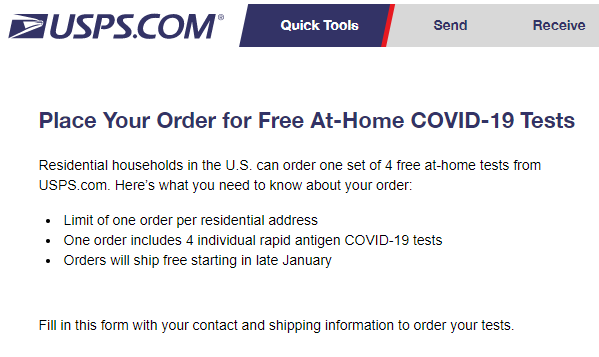
COVIDTest.gov now taking orders for 4 free at-home tests

It looks like you can now order your free Covid At-home test kits via the USPS.


COVIDtests.gov


This is the confirmation text...

"COVID-19 tests will start shipping in late January.

"USPS will only send one set of 4 free at-home COVID-19 tests to valid residential addresses. "Thank You! "Your order #: (28 alpha-numeric code) has been placed. "If you provided your email address, we'll send you an order confirmation email and delivery updates."

Tuesday, November 16, 2021

"Older Adult Finances: Tips & Traps" Free Download Coming

 Much of the research I'm doing these days related to issues encountered by older adults like myself involves finance. Especially now, the Medicare Annual Election Period (AEP), which will end December 7th, this topic is important and requires immediate attention. Most agents now are very busy, and require an appointment to answer questions and make suggestions for either Medicare Advantage Plans (MAPs) or Medicare Supplement Plans (MSPs), two very different entities.

As a way of promoting this blog and my beginning YouTube channel, I'm creating a short pdf with some suggestions about how to approach senior finance.

You can sign up for this download my shooting me an email: info at 3rdActJourney dot com. I expect this download will be available towards the end of this month, but it surely will be worth your while.

Stay tuned for the official launch of my YouTube channel!

Saturday, November 13, 2021

Exorbitant Rise in Medicare Part B Premium and Deductible

This is the typical government strategy of releasing bad news on a late Friday afternoon.

Departing from the Medicare Trustees' recommendation, the out-patient Part B premiums will increase 14.8%, or more than an extra $260 per year for 2022. The 2021 Medicare Part B premium cost was $148.50 per month, but for 2022 it will be $170.10. It was anticipated that the increase would be to $158.50 per month. The Trustees' report recommended a $215 to $217 increase in the yearly cost. The deductible will be increasing from $203 to $233. (The increase in Social Security is 5.9%.)

For those on a fixed income, or those not able to work overtime, will have this added to the extra burden of food costs due to increasing inflation.

The new Alzheimer's drug, Aduhelm (aducanumab), is a Part B administered drug, and therefore not a Part D drug administered through a separate plan. It is being suggested that CMS is anticipating billions of dollars in extra cost due to this drug, which merits the 14.8% increase in the Part B premium.

It's also being suggested that the anticipate costs of free Covid-19 care is driving this.

People who are choosing their new Medicare Advantage Plans, who still must pay their Part B premium despite some deceptive advertisements, should check the summary of benefits for Part B drugs to see if the cost of this new drug will be passed to them directly. 


"Medicare Part B premiums for 2022 jump by 14.5% from this year, far above the estimated rise in cost," CNBC is reporting.


Another cause for worry will be the ending of the waivers for Covid-19 treatment and care by private insurers which is not mandated by Congress.


CMS Announces 2022 Medicare Part B Premiums

WBUR's "Smarter health: How AI is transforming health care"

This a WBUR radio series starting today : In the first episode in our series Smarter health, we explore the potential of AI in health care —...